
Case study
Thai Embassy boiler installation
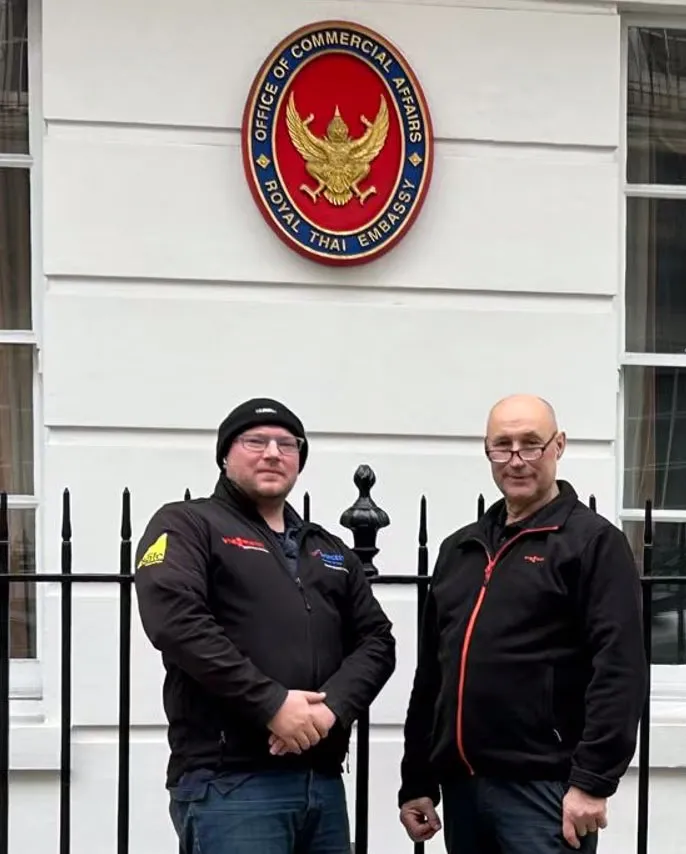
The Royal Thai Embassy in London is housed in a historic building, and it had heating bills that were far too high. Fixing that in a building of that age is harder than it sounds, because whatever went in could not touch the architecture. Andrew Millward led the installation, in collaboration with Boilertrust, and the finished job was written up by Viessmann UK and covered by Modern Building Services.
Information on this page last reviewed August 2026.
The problem
Faced with a building of this size and status, most heating firms reach straight for commercial plant. On paper that is the safe answer. In practice it usually means a large plant room, extensive pipework and structural changes the building was never designed to take. That is manageable in a modern warehouse. It is not manageable in an embassy of this age, where the fabric of the place is part of what you are being asked to protect.
The brief here was simple to state and difficult to solve. Cut the gas consumption without altering the architectural features of the building.
The thinking
Of the companies asked to quote, Boilertrust was the only one to propose a domestic boiler in place of commercial plant. That is not a call you make lightly on a building of this kind. It rests on doing the heat loss calculation properly, understanding how the property is used, and having the confidence to specify what the building actually needs rather than what the setting seems to demand. If the sums are right, a well chosen domestic unit can carry a load that most people would assume needs a commercial system. The sums were right, and the whole job followed from that decision.
Andrew led the installation with Boilertrust carrying out the retrofit alongside him. It was a joint effort, and it worked because both sides brought something the other did not.
Before and after
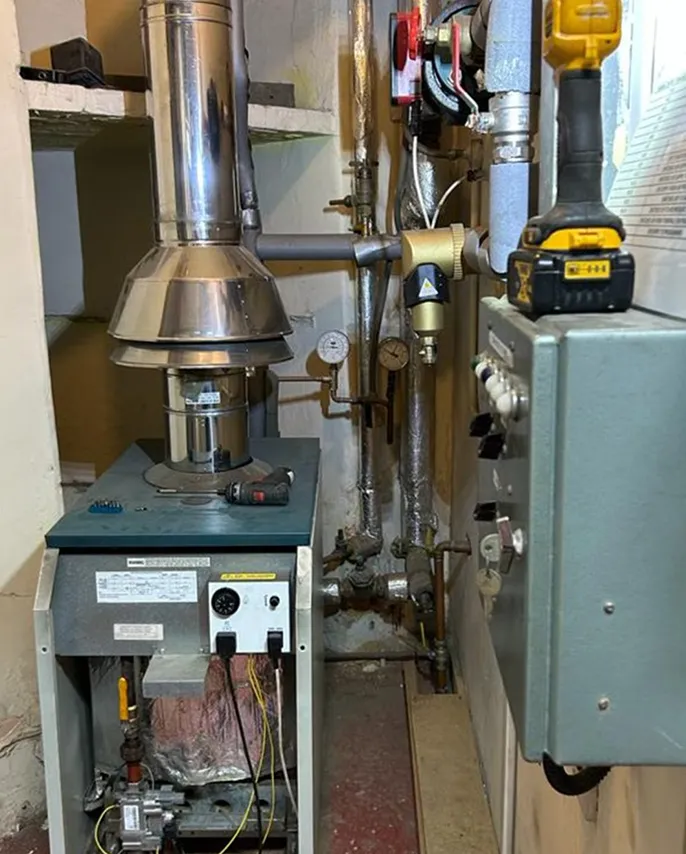
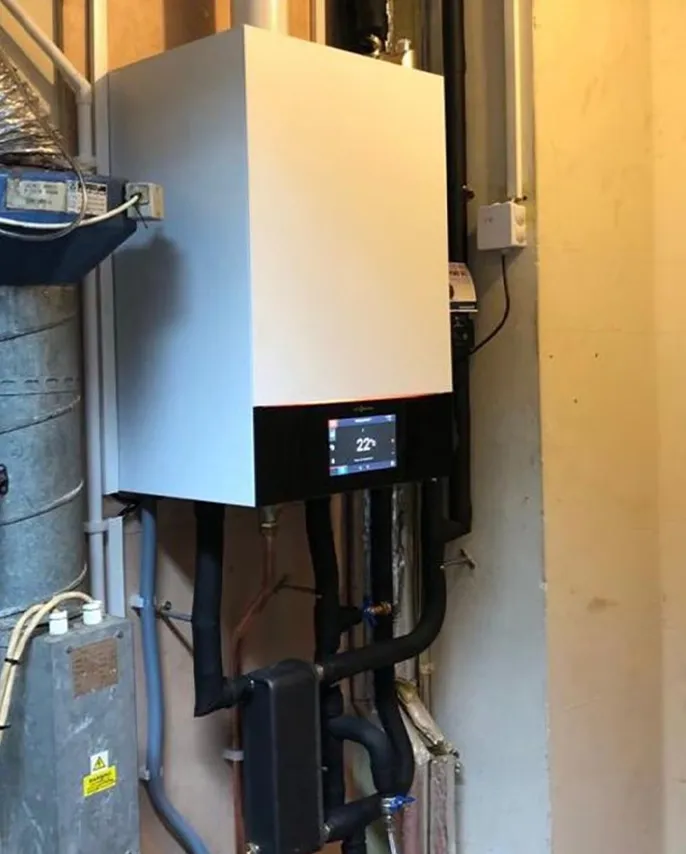
The installation
The boiler fitted was a Viessmann Vitodens 200-W. It is a wall mounted gas condensing unit, rated at 32 kW heating output. In a normal house that would be an unremarkable choice. Here it is the whole point of the design.
The installation included hydraulic separation using a plate heat exchanger. In plain terms that keeps the boiler's own circuit apart from the wider heating system, so each side runs at its own flow and pressure without one pulling the other around. It is the piece that lets a domestic boiler drive a much larger distribution system without fighting it.
Weather compensation controls were fitted at the same time. Weather compensation means the boiler reads the outside temperature and lowers its flow temperature when the weather is milder, rather than blasting out heat at the same rate regardless. You get a warm building using less gas, and the boiler spends more of its life running in condensing mode where it is most efficient. It is also something we specialise in, and it sits alongside our Heat Geek work on system design.
The Vitodens uses Lambda Pro Plus combustion control. This measures the combustion in real time and adjusts for variations in the gas supply and for the effect of wind on the flue. In practice it keeps the boiler's efficiency steady through the seasons without anyone having to visit and re-tune it.
The whole installation was completed on site in four days.
The outcome
Viessmann's case study forecasts that the embassy's heating bills will fall by up to around 50%, worth thousands of pounds a year. That is a forecast published by Viessmann rather than a measured result, so treat it as the expectation the design was built around.
The corroboration is where this case study earns its keep. Viessmann UK published the full case study on their own site, and Modern Building Services covered the project in Heating bills at the Thai Embassy. Both are worth reading in full if you want the detail from the source.
What it means if you are a homeowner
Your house is not an embassy, the scale of the job is smaller and the constraints are different, but the thinking behind the work does not change.
The engineer who led the embassy installation designs and fits domestic heating systems across Watford and Hertfordshire every week. Andrew has more than 40 years in the trade, is a Heat Geek Elitist, is Viessmann accredited, and is Gas Safe registered under 586325. When we come to look at your home the first questions are the same ones we asked at the embassy: what does this building actually need, and what is the most efficient way to give it that without disturbing the place any more than we have to.
If you would like a straight answer about the right heating system for your own home, get in touch. You can also read about the Viessmann boilers we install, boiler installation in Watford, the wider boiler work we do, or more about Home Comfort Assured.
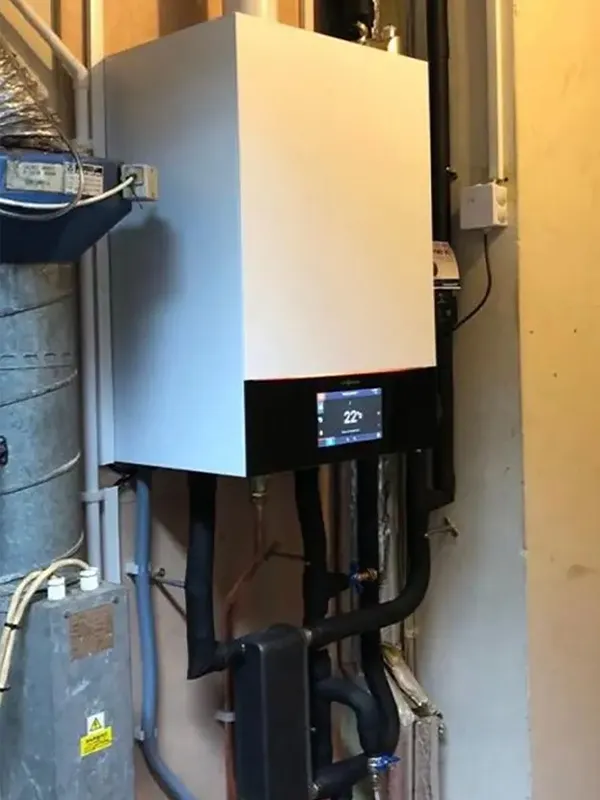
Meet your engineers
The engineers who turn up
Two engineers, both Gas Safe registered under registration 586325. When you book Home Comfort Assured, this is who does the work.
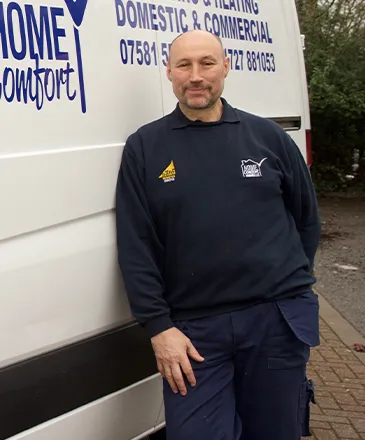
Andrew Millward
Founder and heating engineer
- 40+ years experience
- Heat Geek Elitist
- Viessmann accredited
Andrew has over 40 years in the trade and specialises in fault finding, boiler and heating repairs, and the design of energy efficient systems like heat pumps and underfloor heating.
Andrew on YouTube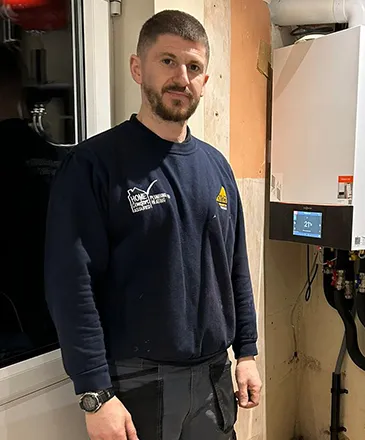
Elis Harizi
Director and plumbing & heating engineer
- Plumbing since 2007
- Heat Geek member
- Gas qualified
Elis trained as a plumber in Greece in 2007, moved to England to gain his gas qualifications, and now designs and installs energy efficient heating as a Heat Geek member.
Want the same thinking applied to your home?
Call and speak to the engineer who led the embassy installation, or request a fixed quote. We cover Watford and all of Hertfordshire.